
// Vinyl
Vinyl vs Digital DJing: Which Is Right for You in 2026?
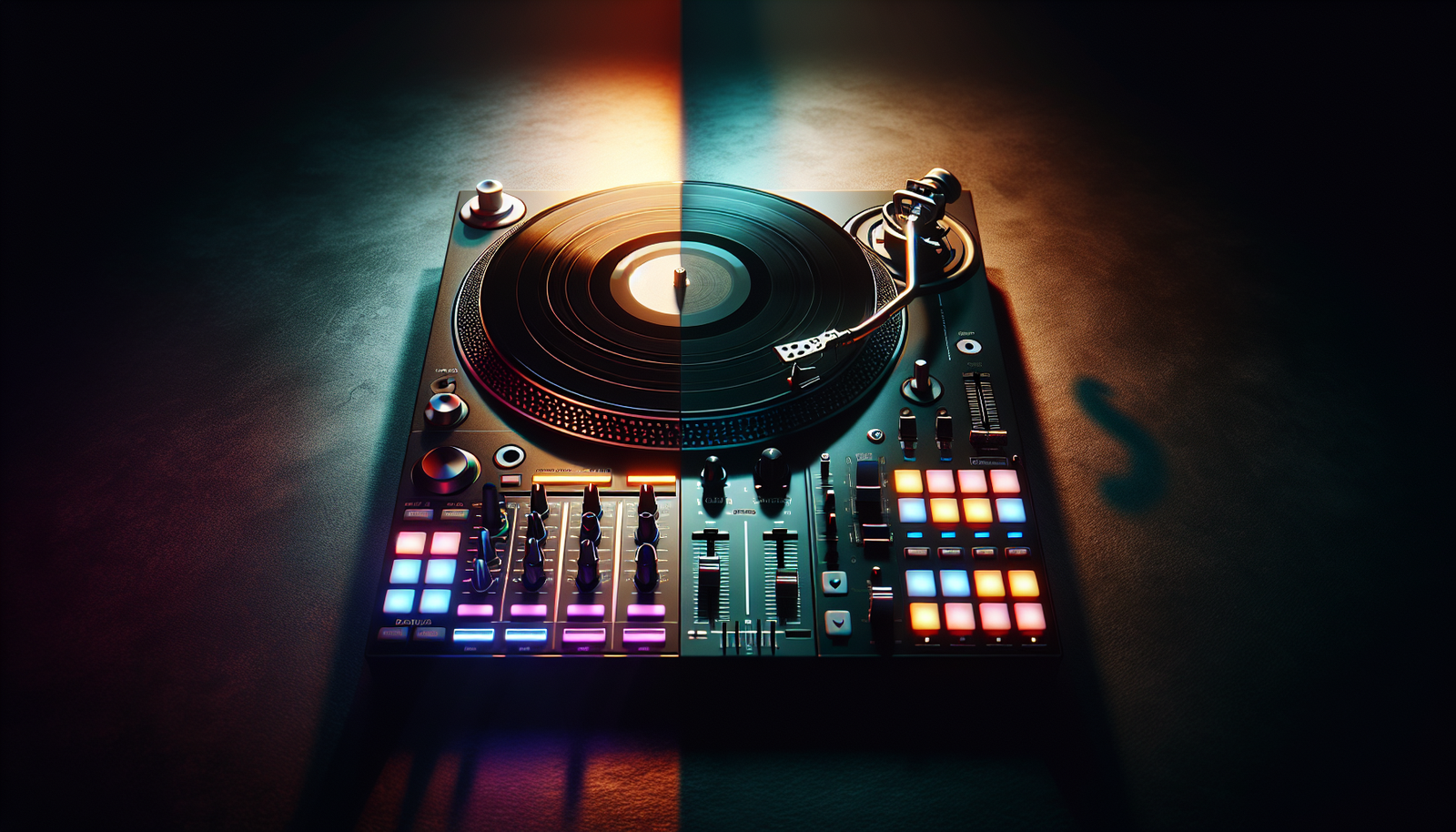
Introduction
Few debates in DJ culture are as passionate as vinyl versus digital. Purists argue that there's no substitute for the feel and warmth of wax. Digital advocates point to convenience, reliability, and access to virtually every track ever made. Both sides have valid points — and the reality in 2026 is that most professional DJs blend elements of both.
This guide gives you an honest comparison to help you decide which approach is right for your situation.
What Is Vinyl DJing?
Vinyl DJing means playing music on physical records — typically 12-inch singles or albums — using turntables and a mixer. The DJ controls the music manually: placing the needle, cueing up tracks, beatmatching by ear and by feel, and performing transitions by hand.
It's the original form of DJing, developed in the 1970s by pioneers like DJ Kool Herc and Grandmaster Flash, and it remains alive and well in house, techno, hip-hop, and jazz scenes worldwide.
What Is Digital DJing?
Digital DJing uses software (Serato, Traktor, Rekordbox, Djay) and hardware (DJ controllers, CDJs, or DVS setups) to play digital audio files. Tracks are stored on a laptop, USB drive, or SD card, and the software handles waveform display, BPM analysis, key detection, and sometimes beat syncing.
DVS (Digital Vinyl Systems) like Serato Scratch Live allow DJs to use actual turntables with special timecode vinyl to control digital files — a hybrid approach that's become extremely popular.
Vinyl: Pros and Cons
Pros
Sound character
Many listeners and DJs describe vinyl as "warmer" — and there's technical truth to this. Vinyl playback includes subtle harmonic distortion and filtering that many find pleasing, especially in genres like soul, jazz, and house.
Tactile connection to the music
There's something fundamentally different about physically holding a record, dropping the needle, and blending tracks by ear. Many DJs say it forces a deeper connection with the music and improves their listening skills.
Unique records
Countless tracks — especially rare funk, soul, reggae, and early electronic music — were never released digitally. Vinyl is the only way to play them.
Crowd presence
A DJ spinning records commands visual attention in a way that staring at a laptop screen doesn't. The ritual of flipping through crates, pulling a record, and dropping the needle is part of the performance.
Cons
Cost
Vinyl is expensive. New 12-inch singles typically cost $15–25 each. Building a respectable collection of 200 records represents a $3,000–5,000 investment — before you buy turntables and a mixer.
Weight and logistics
A DJ bag of 50 records weighs 15–20 kg. Flying to gigs with vinyl is either impossible or very expensive. Many vinyl DJs travel only with a curated selection, limiting their flexibility.
Record damage risk
Records wear with each play. A scratch or warp from a rough venue can permanently damage a record you paid $40 for.
Limited track selection
If a track wasn't pressed to vinyl, you can't play it. In an era of streaming exclusives and digital-only releases, this is an increasingly significant constraint.
Digital: Pros and Cons
Pros
Access to everything
Your entire library — potentially millions of tracks — fits on a USB drive. You can prepare for any request, any genre, any mood.
Portability
A DJ controller fits in a backpack. Flying to gigs is simple. Many clubs have CDJs already installed — bring a USB and you're ready.
Preparation tools
Rekordbox, Serato, and Traktor offer powerful preparation tools: key detection, BPM analysis, cue points, loops, and waveform analysis. These tools help DJs plan sets more precisely.
Lower cost to start
An entry-level DJ controller and a laptop can cost under $300 — far less than a vinyl setup of equivalent quality.
Cons
Technical dependency
Software crashes. Cables fail. A digital DJ mid-set without a backup plan faces a silent room. Vinyl never crashes.
Less character in the sound
Digital audio played through a PA is technically accurate but can sound clinical compared to vinyl, especially in acoustic listening environments.
Easier to rely on sync
Beatmatching by ear is a fundamental DJ skill. Digital sync features make it easy to skip developing this skill — which can limit a DJ's musicality long-term.
The Hybrid Approach: DVS Systems
Digital Vinyl Systems give DJs the best of both worlds. Using timecode records on real turntables, DJs control digital audio files with the physical feel and control of vinyl. Serato DJ Pro and Traktor Scratch Pro are the industry leaders.
This setup requires:
- Two turntables
- A DJ mixer with a phono/USB interface or a dedicated DVS interface
- A laptop running Serato or Traktor
- Timecode vinyl (included with most DVS software)
Building Your Tracklist After a Vinyl Set
One challenge with vinyl DJing is building the tracklist afterward — especially when you play tracks from memory without stopping to write them down. 45 Mix Trackr solves this: upload your recorded set and it automatically identifies every track using audio fingerprinting, returning song titles, artists, and album covers in minutes.
Which Should You Choose?
| Factor | Vinyl | Digital |
|---|---|---|
| Budget | Higher | Lower |
| Portability | Low | High |
| Sound character | Warm, tactile | Accurate, flexible |
| Track selection | Limited | Unlimited |
| Skill development | High | Varies |
| Reliability | High | Depends on tech |
Choose vinyl if: You value the tactile experience, you play genres where rare vinyl is essential (soul, reggae, early house, jazz), and you're committed to developing your ear.
Choose digital if: You gig frequently across different venues, you need access to a wide library, or you're just starting out and want to learn the basics affordably.
Choose hybrid (DVS) if: You want the feel of vinyl with the flexibility of digital — and you're willing to invest in the setup.
Conclusion
In 2026, the vinyl vs digital debate is less binary than ever. Many of the world's best DJs use elements of both formats depending on the gig, the venue, and the music. The most important thing isn't the format — it's the music selection, the reading of the crowd, and the ability to create a moment. Start with whatever you can afford, learn the fundamentals, and let the music guide the rest.
SH
SH is a New York–based designer who DJs vinyl and built 45 Mix Trackr after spending too many hours identifying his own mixes by hand. He records, edits and publishes mixes every month, and writes these guides from that workflow. More about 45 Mix Trackr
// Try it
Identify your DJ mix
Upload any audio or video mix and get a full tracklist with song titles, artists, and album covers in minutes.
Identify a mix →