
// Gear
Turntable Cartridges and Styli: A DJ's Complete Guide
Why the Cartridge Matters More Than the Turntable
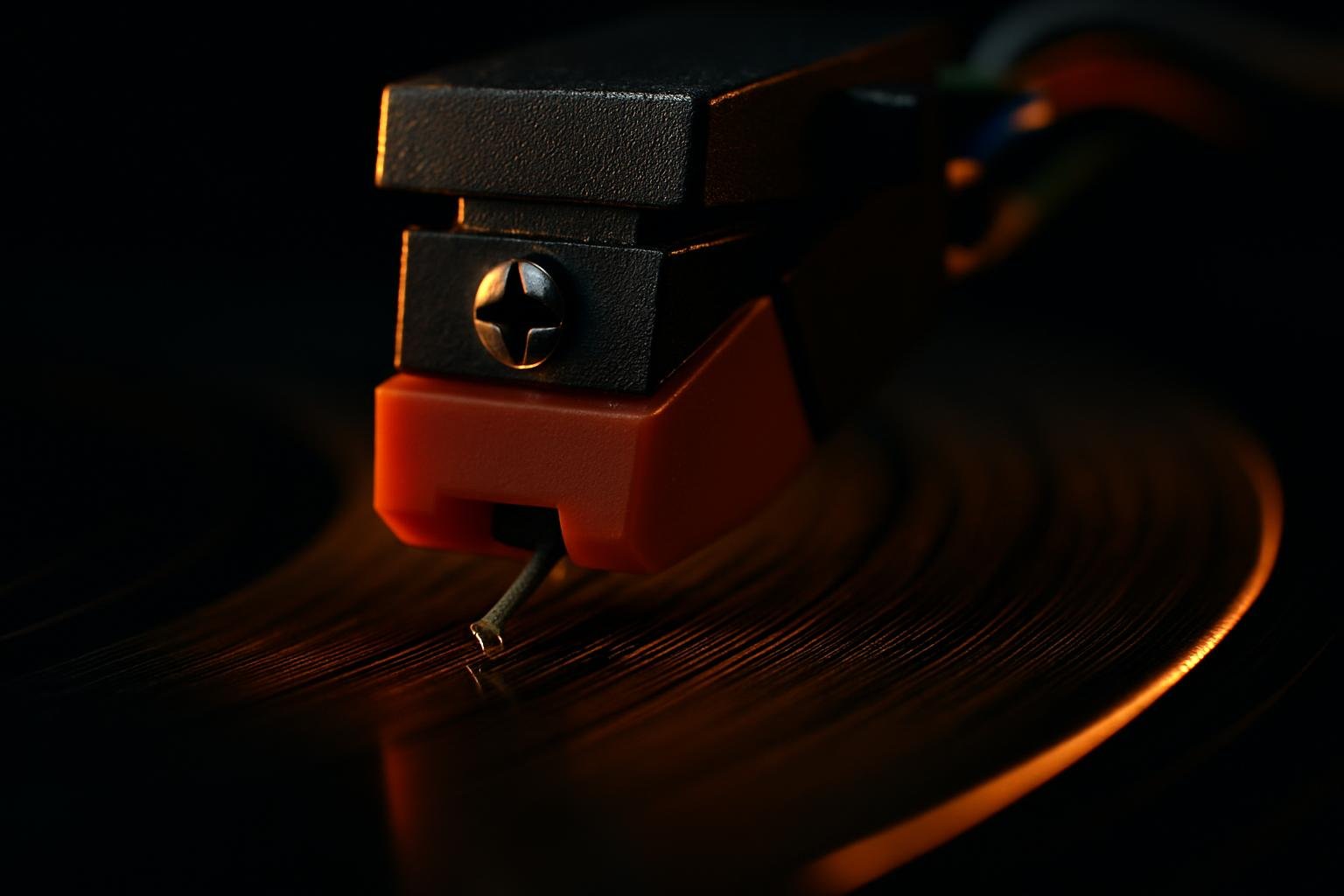
Of everything in a vinyl setup, the cartridge is the only component that physically touches the record. A tiny diamond tip rides a groove roughly 50 microns wide and converts wall movement into an electrical signal measured in thousandths of a volt. Everything downstream — preamp, mixer, amplifier, speakers — is amplifying whatever that tip managed to read.
This is why a modest turntable with a good cartridge routinely outperforms an expensive deck with a worn stylus. It is also why the cartridge is the upgrade that changes the sound most audibly for the least money.
For DJs there is a second consideration that hi-fi buyers never think about: the cartridge has to survive being cued, backspun and dragged backwards across a groove, sometimes for hours a night. The qualities that make a cartridge sound best and the qualities that make it survive a set are not the same, and choosing well means knowing which trade-off you are making.
Cartridge vs Stylus vs Needle: The Terms
These get used interchangeably and it causes real confusion when buying.
| Term | What it actually is |
|---|---|
| Cartridge | The whole body — magnets, coils, mounting holes, output pins |
| Stylus | The removable assembly: cantilever plus diamond tip |
| Needle | Informal name for the stylus, or sometimes just the tip |
| Headshell | The bracket that holds the cartridge and clips into the tonearm |
The practical consequence: you usually replace the stylus, not the cartridge. On most DJ cartridges the stylus pulls off the front and a replacement costs a fraction of the whole unit. Buying a complete cartridge when you only needed a $30 stylus is one of the more common beginner mistakes.
Moving Magnet vs Moving Coil
The two designs differ in which part moves inside the magnetic field.
Moving magnet (MM) puts a small magnet on the end of the cantilever, moving inside fixed coils. Output is relatively high — typically 3–6 mV — which every standard phono input expects. The stylus is user-replaceable because the magnet comes away with it.
Moving coil (MC) reverses the arrangement: tiny coils move within a fixed magnet. The moving mass is far lower, which allows the tip to track fine detail more accurately. Output is very low, typically 0.2–0.6 mV, requiring either a dedicated MC phono stage or a step-up transformer. The coils are part of the cartridge body, so a worn stylus usually means returning the whole cartridge for a rebuild.
| Moving magnet | Moving coil | |
|---|---|---|
| Output | 3–6 mV | 0.2–0.6 mV |
| Phono stage | Any standard input | MC-capable, or a step-up |
| Stylus replacement | Pull off, push on | Return for rebuild |
| Typical cost | $25–300 | $300–2,000+ |
| Survives backcueing | Yes | No |
| Best for | DJing, everyday listening | Critical listening only |
For DJs the answer is moving magnet, essentially always. MC cartridges are fragile, expensive to service, and their low output is a poor match for a DJ mixer's phono stage. The detail advantage is real but irrelevant on a club system, and it disappears the first time you backspin.
Stylus Profiles: The Shape of the Diamond
The tip shape determines how much of the groove wall the stylus contacts, and it is the single most important specification after MM/MC.
Conical (spherical) — a simple rounded tip, typically 0.6 mil radius. It sits relatively high in the groove and contacts a small area. Because it does not need to be precisely aligned to sound right, and because it tolerates being pushed backwards, this is the classic DJ profile. It reads less high-frequency detail than the alternatives, which on a dance floor nobody notices.
Elliptical — narrower front-to-back, wider side-to-side. It sits deeper and follows the groove's rapid modulations more accurately, which audibly improves treble and reduces distortion toward the record's centre. It is also less forgiving of poor alignment and wears the groove faster if tracking force is wrong. Fine for DJs who mix rather than scratch; overkill if you cue hard.
Hyperelliptical, Shibata, line contact, microline — progressively more sophisticated shapes with a long, narrow contact patch. They extract the most detail and, counterintuitively, spread wear over a larger area so they last longer when set up correctly. They are also the least tolerant of misalignment and completely unsuited to backcueing.
| Profile | Groove contact | DJ use | Typical life |
|---|---|---|---|
| Conical | Small, shallow | Ideal — scratching and cueing | 500–800 hours |
| Elliptical | Deeper, narrower | Fine for blending, not scratching | 400–600 hours |
| Shibata / line contact | Long, narrow | Listening only | 800–1,000 hours |
The rule of thumb: the more detail a profile extracts, the less abuse it tolerates. Pick for how you actually use the records.
Tracking Force, and Why DJs Run Heavy
Tracking force is the downward pressure the stylus applies, set by the tonearm counterweight and measured in grams.
Hi-fi cartridges typically want 1.5–2.0 g. DJ cartridges are designed for 2.5–4.0 g, and some scratch-oriented models tolerate more. The heavier setting keeps the stylus in the groove during a backspin or a hard cue, where a lightly tracking stylus would simply jump out.
Both extremes cause damage, in different ways:
- Too light and the stylus rattles against the groove walls instead of riding them. This mistracking sounds like distortion on loud passages and is more damaging than moderate extra weight, because the tip is effectively hammering the vinyl.
- Too heavy and you accelerate wear on both stylus and record, and the sound goes dull and compressed.
Always set force to the manufacturer's stated range for that specific cartridge, using a stylus scale if you have one — the numbers printed on a counterweight dial are frequently off by a few tenths of a gram. Skipping is far more often a tracking-force or alignment problem than a "bad cartridge".
What DJs Actually Use
Rather than ranking products that go in and out of production, here is what each tier gets you.
Entry, roughly $30–70. A conical DJ cartridge, often bundled with the deck. Loud output, robust, tolerant of rough handling and imperfect setup. Detail is limited and it will not flatter a good record, but it will not skip either. Perfectly adequate for practice and for parties.
Working DJ, roughly $80–200. The bulk of the market, and where most DJs settle permanently. Better tip polish and a higher-quality cantilever, still conical or gently elliptical. Meaningfully cleaner than entry level while remaining replaceable and forgiving. The integrated-body designs — where cartridge and headshell are one moulded unit — belong here and are the easiest option, since there is no alignment to get wrong.
Premium DJ, roughly $200–400. Higher output for a stronger signal into the mixer, better channel separation, more refined stylus grinds. Worth it if you play on good systems and can hear the difference; not worth it if the cartridge lives in a bag and gets knocked about.
Hi-fi crossover, $300+. Elliptical or line-contact profiles from listening-oriented brands, mounted on a DJ deck for home use. Excellent on a well-aligned arm with correct tracking force, and a bad idea for anything involving a hand on the platter.
Two practical notes. Integrated cartridge-and-headshell designs trade a little flexibility for the guarantee that alignment is correct out of the box — a genuinely good trade for most people. And buy two identical cartridges rather than one of each: matched output across both decks means your gain settings stay consistent when you swap between them.
When to Replace the Stylus
A worn stylus damages every record it touches, permanently. This is the one piece of maintenance worth being strict about.
Hours are the real measure. Manufacturers quote 500–1,000 hours depending on profile, but that assumes clean records and correct tracking force. Dirty vinyl is abrasive and can halve the figure. If you play three hours a week, a conical stylus lasts roughly three to four years; a working DJ playing weekends will get through one in a year or less.
Signs it is due:
- Treble sounds dull, or cymbals turn to hiss
- Distortion on loud passages that is not there on other copies
- Sibilance — harsh, splashy "s" sounds on vocals
- Increased surface noise on records you know are clean
- The tip looks flattened, chipped or angled under magnification
How to inspect it. A 30x loupe or a phone camera with a macro lens works. A healthy tip is symmetrical and rounded; a worn one has a visible flat facet, and a damaged one is chipped or bent to one side. A bent cantilever means replacement regardless of hours.
Track it deliberately. Write the install date on a piece of tape inside the record box. Nobody remembers when they last changed a stylus, and the sound degrades slowly enough that you acclimatise to it — most people discover how worn theirs was only after fitting a new one.
Cleaning and Care
Clean the stylus before every session, and during long ones. Dust that collects on the tip is dragged through every groove afterwards. A carbon-fibre stylus brush costs a few dollars: brush back to front only, in the direction the record travels, never side to side, which stresses the cantilever laterally.
Use stylus cleaning fluid sparingly and apply it to the brush, never dripping it onto the stylus — fluid running up the cantilever can dissolve the adhesive holding the assembly together.
Clean the records too. Stylus wear and record wear are the same problem: grit between diamond and vinyl. A record cleaned properly extends stylus life measurably, which is a better argument for a cleaning routine than sound quality alone.
Fit the stylus guard whenever a deck sits idle, especially in a bag. Most styli die from a knock, not from playing.
Common Problems, Diagnosed
It skips. Check tracking force first, then anti-skate, then whether the deck is level. Alignment comes next. An actual cartridge fault is the least likely explanation.
One channel is quiet or dead. Almost always a headshell wire that has worked loose. Pull the headshell and reseat the four coloured tags on the cartridge pins — they are a friction fit and vibration loosens them.
It hums. A grounding problem, not a cartridge problem. See the grounding section in our guide to vinyl DJ mixers.
Distortion that worsens toward the label. Classic misalignment. Set overhang and offset with a protractor — the procedure is in our turntable setup guide.
Everything sounds thin and quiet. The signal is going into a line input rather than a phono input, so the RIAA curve is never applied. This is a wiring problem, and it is extremely common.
What to Buy, Practically
If you are starting out and mixing rather than scratching, a conical moving-magnet cartridge in the $80–200 range, bought as an integrated cartridge-and-headshell unit, in a matched pair covers almost every case. It is robust, alignment is handled for you, and the sound is well beyond what the bundled cartridge on a beginner deck delivers.
Upgrade the stylus rather than the cartridge when the time comes, keep a spare, and inspect it more often than feels necessary. The cartridge is the cheapest place to improve how a system sounds and the easiest place to quietly ruin a record collection.
Once your records are playing properly, 45 Mix Trackr can identify everything in a recorded set and hand you the tracklist, album art and subtitles — so the effort you put into the sound also gets the artists properly credited.
SH
SH is a New York–based designer who DJs vinyl and built 45 Mix Trackr after spending too many hours identifying his own mixes by hand. He records, edits and publishes mixes every month, and writes these guides from that workflow. More about 45 Mix Trackr
// Try it
Identify your DJ mix
Upload any audio or video mix and get a full tracklist with song titles, artists, and album covers in minutes.
Identify a mix →