
// Vinyl
How to Clean Vinyl Records: The Complete Guide for DJs and Collectors
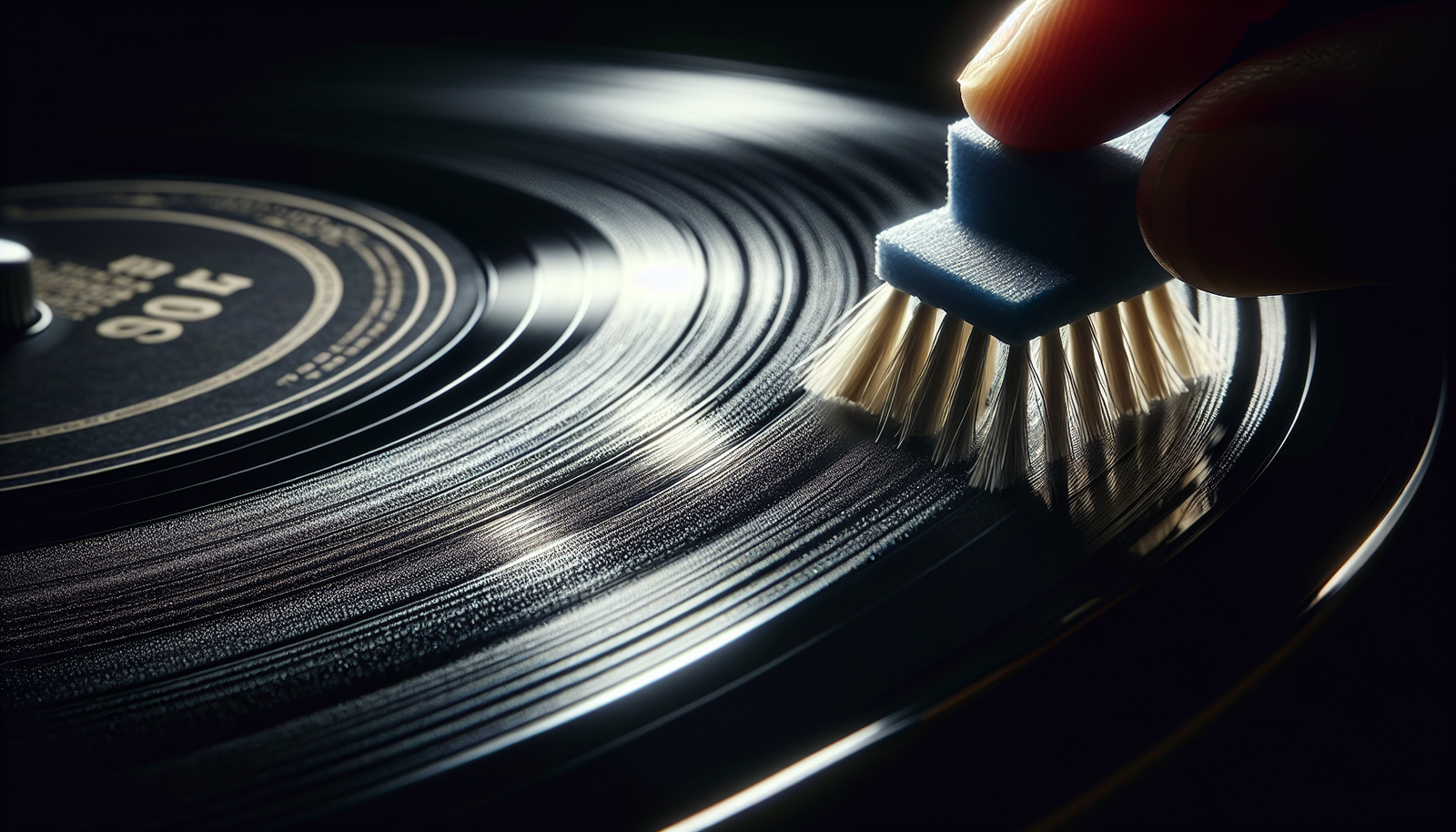
Introduction
A dirty record doesn't just sound worse — it actively damages your stylus. Dust, grease, and grit in the grooves act like sandpaper against the diamond tip, wearing it down with every play. Regular cleaning is one of the most impactful things you can do for both sound quality and the longevity of your equipment.
This guide covers every cleaning method, from a quick daily brush to deep wet cleaning for thrift store finds.
Why Records Get Dirty
Vinyl is statically charged, which means it attracts dust like a magnet. Every time you play a record, the stylus pushes debris further into the groove. Add fingerprint oils, smoke residue from old venues, and general environmental grime — and even a "clean" looking record can be sonically degraded.
Signs your record needs cleaning:
- Audible crackling or popping that wasn't there before
- Dull, muffled high frequencies
- Visible dust or smudges on the playing surface
- Static shocks when you pick the record up
Method 1: Carbon Fiber Brush (Daily Maintenance)
The carbon fiber brush is the most important piece of record care equipment a DJ owns. Used before every play, it removes loose surface dust and discharges static.
How to use it:
1. Place the brush across the grooves while the record spins on the platter
2. Hold it lightly — don't press down
3. After a few rotations, lift the brush toward the edge to sweep the dust off
4. Never drag loose dust toward the label
This takes 10 seconds and should be a habit before every single play. It won't remove embedded grime, but it prevents surface dust from being pushed deeper into the groove.
Method 2: Velvet Record Brush
Similar to the carbon fiber brush but uses soft velvet fibers to physically lift dust from grooves. Some DJs prefer velvet for its gentle touch on delicate vintage pressings.
Use the same technique as the carbon fiber brush — let the record spin and hold the brush lightly across the surface.
Method 3: Wet Cleaning (Record Cleaning Fluid)
For records with visible smudges, embedded grime, or second-hand finds, wet cleaning is necessary. You'll need:
- Record cleaning fluid (specifically formulated — never use tap water or household cleaners)
- A microfiber or velvet cleaning pad
- A drying rack or clean surface
Process:
1. Apply a few drops of cleaning fluid to the pad
2. Place the pad on the spinning record, applying light pressure
3. Move the pad with the grooves (not against them) for 3–4 rotations
4. Wipe the residue with the dry side of the pad
5. Let the record fully air-dry before playing
Recommended fluids: Mobile Fidelity Sound Lab record cleaning fluid, Spin-Clean solution, or GrooveWasher G2.
Method 4: Record Cleaning Machine (Best Results)
For serious collectors and DJs with large or valuable collections, a vacuum record cleaning machine is the gold standard. It applies fluid, scrubs the grooves with a brush, then vacuums up the dirty fluid — leaving the record truly clean.
Top options:
- Okki Nokki — affordable, manual operation, excellent results
- Nitty Gritty — reliable workhorse used in many record stores
- Audio Desk Systeme — ultrasonic cleaning, the most thorough available
A single RCM session can transform a crackly thrift store record into something that sounds nearly new.
Method 5: Spin-Clean Record Washer
A budget alternative to a full RCM. The Spin-Clean is a basin with two brushes that clean both sides of the record simultaneously as you rotate it by hand. At around $80, it's the best value wet-cleaning solution available.
Great for cleaning batches of second-hand records before they go into your collection.
Which Method for Which Problem
Cleaning advice fails when people apply a heavy method to a light problem, or a light method to a serious one. Diagnose first.
| What you are dealing with | Right method | Why |
|---|---|---|
| Dust from sitting on the shelf | Carbon fibre brush before each play | Surface dust, no adhesion |
| Static crackle, otherwise clean | Carbon fibre brush, grounded | Static is the cause, not dirt |
| Second-hand record, visible grime | Wet clean | Dirt is bonded into the groove |
| Fingerprints and grease | Wet clean with surfactant | Oil does not brush off |
| Mould or mildew spotting | Wet clean, then new sleeve | The old sleeve is contaminated |
| Persistent tick in one spot | Nothing — likely damage | Cleaning will not fix a scratch |
That last row matters. A repeating click at the same point in a rotation is almost always physical groove damage, not dirt, and repeated aggressive cleaning in pursuit of it does more harm than the click does. Clean it once properly; if the tick survives, it is part of the record now.
Distilled Water Is Not Optional
The most common home-cleaning mistake is using tap water. Tap water carries dissolved minerals, and when the water evaporates those minerals stay behind — in the groove, where the stylus then rides over them. The record ends up measurably noisier than before it was cleaned.
Use distilled water specifically. Not filtered, not bottled mineral water, not boiled tap water — distillation is what removes dissolved solids, and it costs very little per litre.
A workable homemade solution, if you would rather not buy a commercial fluid:
- 6 parts distilled water
- 1 part isopropyl alcohol, 99 percent
- 1 to 2 drops of a rinse-aid style surfactant per 500 ml
Two cautions on that recipe. Keep alcohol well diluted — high concentrations can attack the record's finish over repeated use, and alcohol should be kept away from shellac 78s entirely, where it dissolves the disc. And use the surfactant sparingly: too much leaves residue, which is the exact problem you are cleaning to remove.
Always finish a wet clean with a distilled water rinse. Cleaning solution left in the groove attracts dust more readily than the dirt you removed.
Technique: Follow the Groove
Whichever method you use, direction matters more than pressure.
Always move with the groove, in circles, never across it. A radial wipe drags particles across every groove it crosses and can push debris deeper. Circular motion follows the path the stylus takes.
Let the fluid do the work. Pressure does not improve cleaning and does risk damage. Apply, let it sit briefly to loosen the grime, then lift it away.
Keep the label dry. Water on a paper label causes staining and lifting that is permanent and, for collectible pressings, expensive. Label protectors exist; a careful hand also works.
Dry completely before sleeving. A record sleeved damp grows mould inside the sleeve. Air-dry on a rack, or use a dedicated microfibre cloth — never paper towel, which sheds fibres directly into the groove.
Use a fresh inner sleeve afterwards. Returning a cleaned record to the sleeve it was dirty in undoes the work immediately. This step is skipped constantly and it wastes the entire effort.
What Cleaning Cannot Fix
Setting expectations honestly saves both money and records:
- Scratches are missing vinyl. Nothing restores them.
- Groove wear from a worn stylus is permanent — this is why a worn stylus is worth replacing promptly.
- Warps are a heat problem, not a dirt problem.
- Pressing defects — non-fill, off-centre holes — were there when it left the factory.
- PVC sleeve haze from decades in the wrong sleeve sometimes improves with a proper wet clean, but often does not.
If a record sounds noisy and looks visually clean under a light, cleaning it a fourth time is not the answer. The realistic options are accepting it or finding a better copy.
What NOT to Do
- Never use paper towels — they scratch the playing surface
- Never use household glass cleaner or alcohol — they strip the groove walls
- Never blow on a record — the moisture in your breath leaves residue
- Never clean against the grooves — always clean in the groove direction (circular)
- Never put a wet record back in its sleeve — moisture trapped in paper causes mold
Stylus Cleaning
Your stylus needs regular cleaning too. A dirty stylus degrades sound quality and re-deposits grime back into clean records.
- Use a stylus brush (a small soft brush) to gently sweep forward-to-back across the stylus tip
- For deeper cleaning, stylus cleaning fluid on a piece of dense foam works well — lower the needle onto the foam gently
- Never clean side-to-side — the cantilever can snap
Building a Tracklist After Cleaning Sessions
After cleaning and playing through a batch of records, use 45 Mix Trackr to record your session and automatically generate a tracklist. It's especially useful when you're sorting through a new thrift store haul and want to catalog what you found.
Conclusion
Record cleaning is the most underrated maintenance habit in vinyl culture. A ten-second brush before every play, occasional wet cleaning for new additions, and proper stylus care will keep your collection sounding great and your equipment lasting longer. Think of it as regular maintenance — like changing the oil in a car.
SH
SH is a New York–based designer who DJs vinyl and built 45 Mix Trackr after spending too many hours identifying his own mixes by hand. He records, edits and publishes mixes every month, and writes these guides from that workflow. More about 45 Mix Trackr
// Try it
Identify your DJ mix
Upload any audio or video mix and get a full tracklist with song titles, artists, and album covers in minutes.
Identify a mix →